

Café · Liverpool · ⭐ 9.7/10 · 360 reviews · updated: 2026-08-10 17:34:29
Address: 44 Simpson St, Liverpool L1 0AX, United Kingdom
The Baltic Triangle is Liverpool’s converted warehouse district — street art, small creative firms, music venues in old industrial units — and the cafés that survive there have to work for two very different crowds at once: the people who come at the weekend to look at the murals, and the people who are at their desks upstairs on a Tuesday. Yonder solves that by being genuinely good at the basics. It is independent, it is female-owned, everything on the plate is made in the building, and the bread comes from a bakery in the same neighbourhood. Nothing about it is a gimmick, which in this postcode is almost a position in itself.
Highlights
- Independent and female-owned — founded by two women with more than twenty years of hospitality experience between them, and still run by them rather than by a group.
- A second act, not a first attempt — the business traded under the name Malmo before becoming Yonder, so the kitchen and the counter were already experienced when the current room opened.
- Local bread, local suppliers — the toast is built on loaves from a bakery in the same district, and sourcing locally is stated policy rather than a slogan.
- Everything made on site — the promise is that food is prepared fresh in the building each day rather than delivered ready-made, which is a real distinction in the brunch genre.
- Seating for every kind of visit — booths, window seats, stools at the bar and larger tables, so the room works for one person with a book and for a table of six.
- Inside a creative workspace building — the café is a tenant in a Baltic Creative complex full of small companies, which gives it a weekday character that a tourist café never has.
What’s in the cup
Honesty first: Yonder does not name its roastery anywhere public. The website talks about local, sustainable suppliers and about making everything in-house, but the bean supplier is not on the site, not on the wall in any published form, and not in the local coverage. If knowing whose coffee you are drinking is important to you, ask at the counter — they will tell you — but do not expect to find it out in advance.
What can be said is where the coffee sits in the operation. This is a brunch café with a serious kitchen rather than a filter bar with a pastry shelf, and the coffee is built to do the job that setting requires: espresso that stands up in milk, poured to a consistent standard, ordered by people who are also eating. The room is not organised around a brew bar, there is no rotating single-origin theatre, and the counter does not expect you to have an opinion about processing methods. Coffee here is the reliable half of a good breakfast, and it is judged on whether it is properly made rather than on whether it is unusual.
That framing matters because it sets the right expectation. Liverpool has bars a short walk away that exist to change your mind about what coffee can taste like; this is not one of them, and it does not pretend to be. What it offers instead is the thing a lot of experimental cafés get wrong — a cup that is the same good on a Tuesday morning as it was the previous Saturday, served by people who have been doing hospitality long enough to know that consistency is the actual craft.
Who’s behind it
Yonder was founded in 2017 by Jessie and Amy, two friends with more than two decades of hospitality experience between them, and it remains independently and female-owned — a fact the business states plainly rather than leaving for someone else to notice. Before it was Yonder it traded as Malmo, and the change of name came with the move into the current room.
That history is more useful than it looks. A café that has already had one life does not open with the mistakes of a first-timer: the menu is the size the kitchen can actually deliver, the seating plan reflects how people really use a room, and the service has the unhurried competence of people who have worked a lot of busy mornings. The founders’ declared values are simple and consistent with what the place does — stay independent, buy locally and sustainably, make everything yourself — and there is no wider empire behind the sign to complicate them.
Being a tenant in a creative workspace complex rather than a landlord’s high-street unit also shapes the business. The café is part of a community of small companies rather than a stand-alone shopfront, and it does catering and venue hire alongside the day-to-day trade, which is the kind of thing that only makes sense when your neighbours are your customers.
Who it suits, and how
The clearest use is brunch with company. The room is set up for it — real tables, a menu that supports a full meal rather than a snack, and the kind of noise level where a group can talk without shouting. Weekend late mornings are exactly what the place is designed around, and if you are showing someone the Baltic Triangle for the first time it is the natural anchor for the visit.
Solo visits work unusually well too, because of the seating mix. Bar seats and window seats are the difference between eating alone comfortably and eating alone conspicuously, and Yonder has both. A single person with a book and a plate of eggs is an ordinary sight here rather than an awkward one.
On working: the café makes no published claims about Wi-Fi or power points, so treat this as something to check at the counter rather than assume. What is true is that the building around it is full of small creative businesses, so on a weekday a proportion of the room is people who work in the district — the atmosphere is used to laptops and quiet conversation rather than hostile to them. The sensible plan is a session of an hour or two in the calmer morning stretch rather than an all-day encampment; the tables are the café’s living during the brunch rush, and a room this well used cannot be treated as an office.
Takeaway is available and works, though the food is the reason to be here and the food does not travel well. If you are grabbing and going, do it on the way to something in the district rather than as a substitute for sitting down.
The room
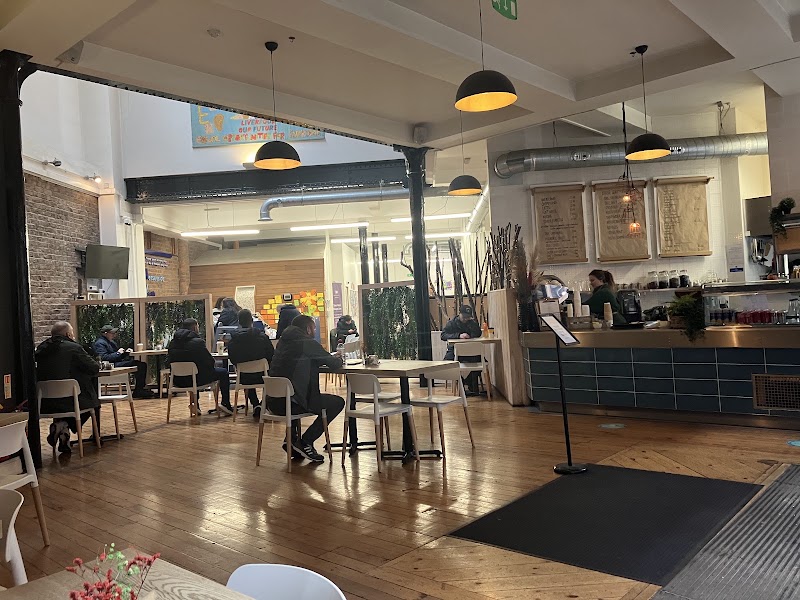
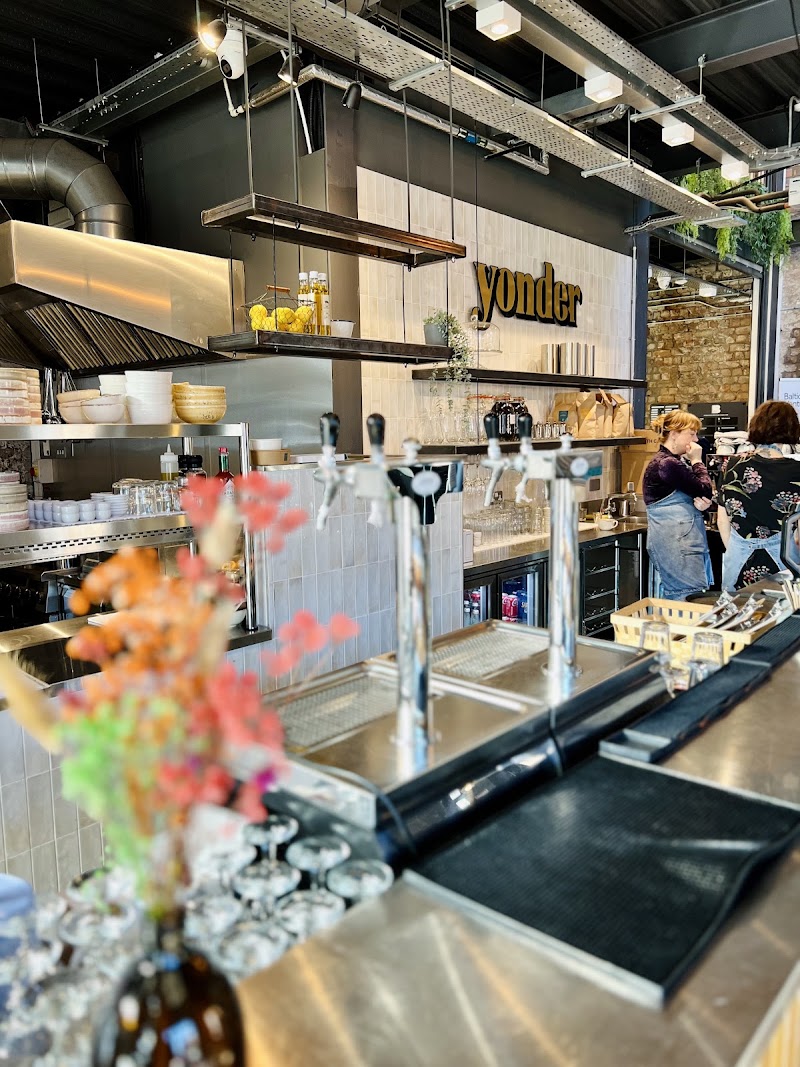
The space is light and warm — a converted unit with big windows rather than a dark box, which is what makes the difference in a district built out of old industrial buildings. The seating is deliberately varied: booths for a group that wants to settle in, window seats for people who like watching the street, stools at the bar for a quick solo stop, and larger tables that can take a proper gathering. Very few cafés of this size bother with that range, and it is the main reason the room copes with such different kinds of visit.
It is genuinely spacious by city-centre standards, which is the advantage of being in a warehouse district rather than in the retail core. The soundtrack is kept relaxed rather than driving, and the calmest part of the day is the morning before the main service builds — after that it gets busy, cheerfully so, and the volume rises with it. If quiet is a requirement, come early.
The setting outside the door is part of the appeal. This is a neighbourhood of murals, converted warehouses and small independent businesses, and the walk to the café is as much a part of the experience as the café itself.
Beyond the coffee
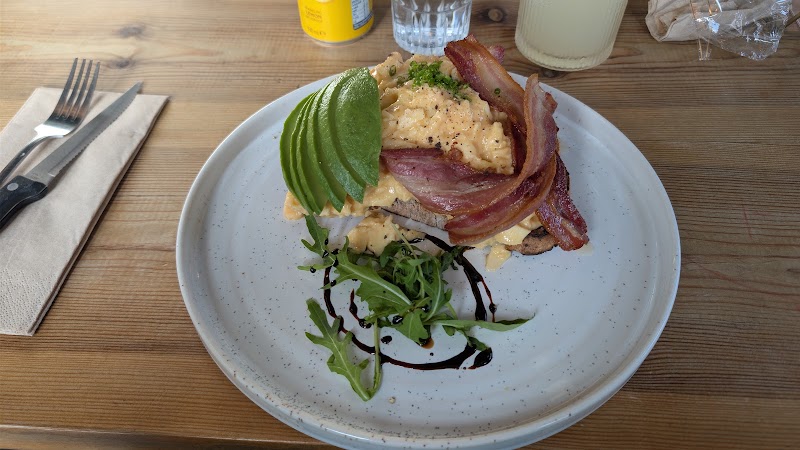
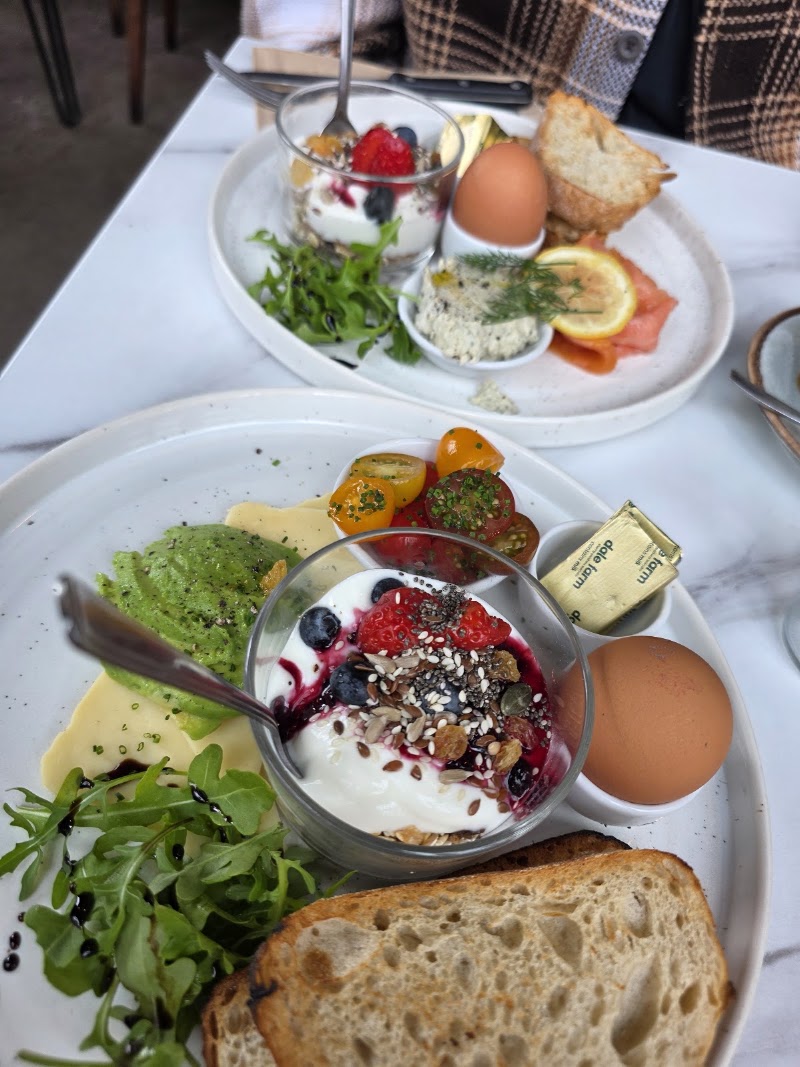
The kitchen is the centre of gravity here. The menu runs from the small end — toast built on bread from a bakery in the same district, porridge for the mornings that need it — up through the full brunch register of eggs, sandwiches and salads. It is a coherent menu rather than an exhaustive one, which is what happens when the food is genuinely cooked on site instead of assembled from deliveries.
The local sourcing is the detail worth holding on to. Buying bread from a neighbourhood bakery costs more and is more work than taking a national supplier’s delivery, and a café only does it if it has decided that the difference on the plate is worth the trouble. That single choice tells you more about the kitchen’s standards than any amount of description of individual dishes.
When to come
This is a daytime café: it opens in the morning and closes in the afternoon, with no evening service, so it belongs to the first two thirds of a day rather than the end of one. Weekday mornings are the calmest and the best time if you want space and a slow start. Weekend late mornings are the busiest and the most fun, when the whole district is out and the room is full.
The Baltic Triangle has a rhythm of its own worth knowing: on weekdays it is a working district full of people who are here for their jobs, and at the weekend it turns into a destination for everyone else. The café feels like two different places in those two modes, and both are worth experiencing. Current opening times, including the later weekend start, are in the schedule block on this page.
Getting there
Yonder is in the Baltic Triangle, the warehouse quarter between the city centre and the southern docks, inside one of the creative-workspace complexes that gave the district its second life. It is a walk of roughly a quarter of an hour from the main shopping streets and from Liverpool Central station, and a shorter one from the waterfront edge of the city centre — comfortably walkable, but far enough out that you arrive deliberately rather than by accident.
The district is also home to the Baltic Market and the Cains Brewery Village complex, so the café combines naturally with a wider afternoon in the area, and the cathedral ridge is above you if you want to climb out of the district afterwards. Parking is easier here than in the retail core, since this is not a pedestrianised zone, but the whole point of the Baltic Triangle is the walking — the street art is the reason people come, and you cannot see any of it from a car.
Good to know
Two practical notes. First, the café does catering and can be hired as a venue, which is unusual for a room this size and worth knowing if you are organising something in the district. Second, the roastery is not published — if the identity of the beans matters to you, that is a counter question, not a website one.
The honest limitation is the trading pattern: it is a daytime business in a district that has become known for its nightlife, so it will not be part of your evening here. And at weekend peak it is busy in a way that a small kitchen making everything from scratch cannot instantly absorb, which means waiting is sometimes part of the deal. Come in the morning and none of that applies.
Questions and answers
Who owns and runs the café?
It was founded in 2017 by Jessie and Amy, who between them had more than twenty years of hospitality experience, and it remains independent and female-owned.
Was it called something else before?
Yes. The business traded as Malmo before becoming Yonder, so the current room is a second chapter rather than a first attempt.
Whose coffee do they serve?
The roastery is not named publicly. The café states that it buys from local, sustainable suppliers, but if you want to know exactly whose beans are in the hopper, ask at the counter.
Is the food actually made there?
That is the café’s stated policy — everything prepared fresh in the building each day — and the bread comes from a bakery in the same district rather than from a national delivery.
Can I sit and work for a while?
Nothing is published about Wi-Fi or power points, so check at the counter. The building is full of small creative businesses, so the room is used to people working quietly, but the sensible approach is an hour or two in the calmer morning rather than a full day at peak.
Is it good for a group?
Yes — better than most. The seating includes booths and larger tables, and the space is generous by city-centre standards, so a proper gathering is manageable here.
Is it open in the evening?
No. It is a daytime café that closes in the afternoon, which is worth remembering in a district otherwise known for its bars and music venues.
Is it worth the walk from the centre?
If you want to see the Baltic Triangle, yes — the district is the attraction and the café is the sensible base for it. If you are only in the retail core and short of time, there are closer options.
Opening hours
| Day | Hours |
|---|---|
| Monday | 09:00–16:00 |
| Tuesday | 09:00–16:00 |
| Wednesday | 09:00–16:00 |
| Thursday | 09:00–16:00 |
| Friday | 09:00–16:00 |
| Saturday | 09:00–16:00 |
| Sunday | 10:00–16:00 |
Photos
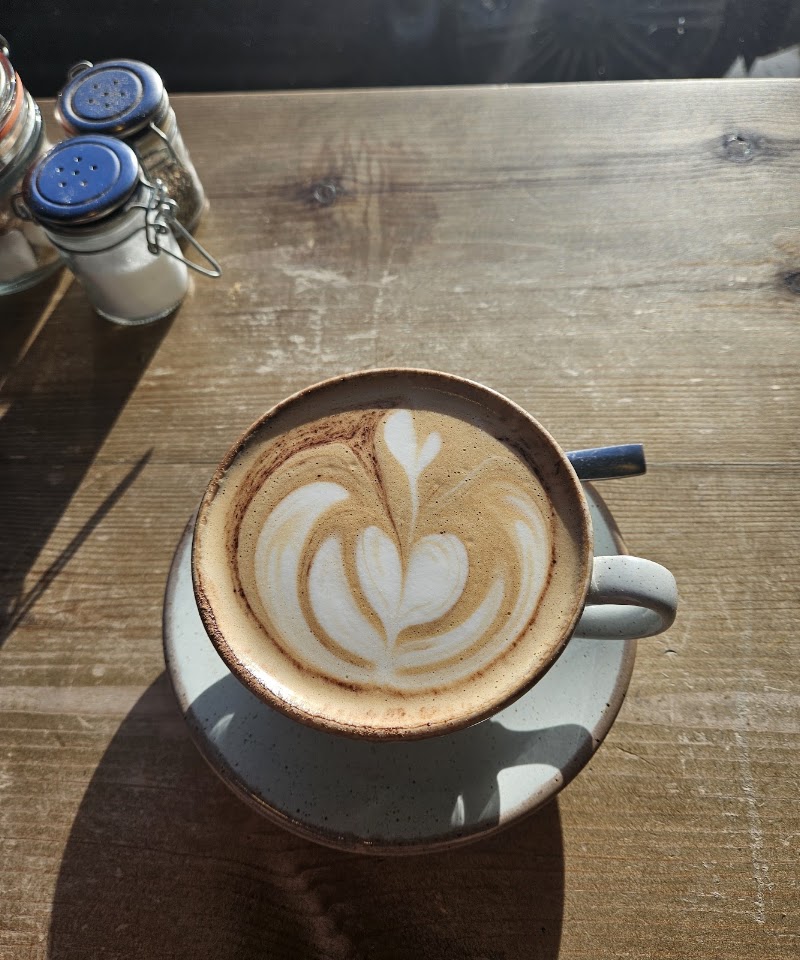
Visitor reviews
Reviews last updated: 2026-08-10 17:34:29
Data is refreshed monthly. Sources: liverpoolka.com and editorial picks based on reviews.
Кав'ярня Yonder дуже швидко стала моєю улюбленою в Ліверпулі. Персонал завжди такий привітний і доброзичливий, а їжа смачна. Кава готується свіжою на замовлення, тому, якщо багато людей, може знадобитися трохи більше час…
У мене був чудовий досвід у Yonder. У мене є кілька харчових алергій, і мені важко знайти місце, де можна поїсти. Офіціантка була дуже привітною та знайшла час, щоб пояснити мені всі варіанти. Я замовила безглютеновий ча…
«Отойде» – НАЙКРАЩЕ. Безперечно, одне з найпривітніших і найдружелюбніших місць, які ви знайдете. Я приходжу сюди кілька разів на тиждень, і їжа завжди ідеальна. Персонал надзвичайно доброзичливий, теплий і гостинний. Це…
Ми добре пообідали після відвідування ринку червоної цегли. Хороша атмосфера та гарний інтер'єр. Добре укомплектоване меню, яке ускладнювало вибір. Також багато варіантів напоїв. Ми насолоджувалися їжею. Отримати рахунок…
Вперше відвідав Yonder. Щиро насолоджувався їжею та обслуговуванням.
Ми замовили бублик з грудинкою та капучино, і обидва були справді свіжими та смачними. Персонал був привітним. Плейлист був чудовий, а музика не була г…