

Café · Liverpool · ⭐ 9.3/10 · 395 reviews · updated: 2026-08-10 17:34:29
Address: 8 Pilgrim St, Liverpool L1 9HB, United Kingdom
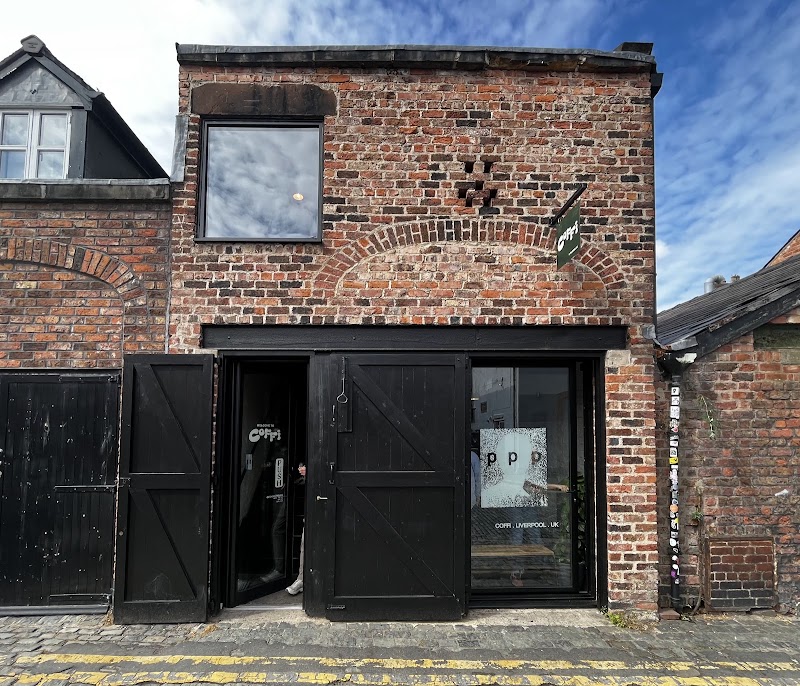
Most cafés pick a roastery, sign the deal and stop thinking about beans. COFFI made the opposite choice and built its entire identity on it: the coffee here changes every two or three weeks, arriving from a different roastery each time, and the espresso you drink in the spring will not be the one you drank in the winter. The room that houses this idea is a restored coach house on a cobbled lane in the Georgian Quarter, whitewashed and almost bare, with a long communal table downstairs and a narrow staircase to more seating above. Nothing about the place is loud. The coffee does the talking.
Highlights
- A multi-roaster bar, not a house brand — instead of a single supplier, the counter carries a rotating cast of roasteries, with the line-up refreshed roughly every two to three weeks.
- European names you would otherwise travel for — Berlin’s Five Elephant and London’s Assembly are among the roasteries whose beans have poured through here, which is a level of sourcing rare outside the capital.
- Pour-over is treated as a real order — filter is not a grudging extra on the board but one of the reasons the place exists, and the staff will steer a newcomer through it without condescension.
- A Grade II-listed coach house — the building is a restored piece of Georgian Liverpool on a cobbled side lane, and the conversion left the brickwork exposed rather than covering it up.
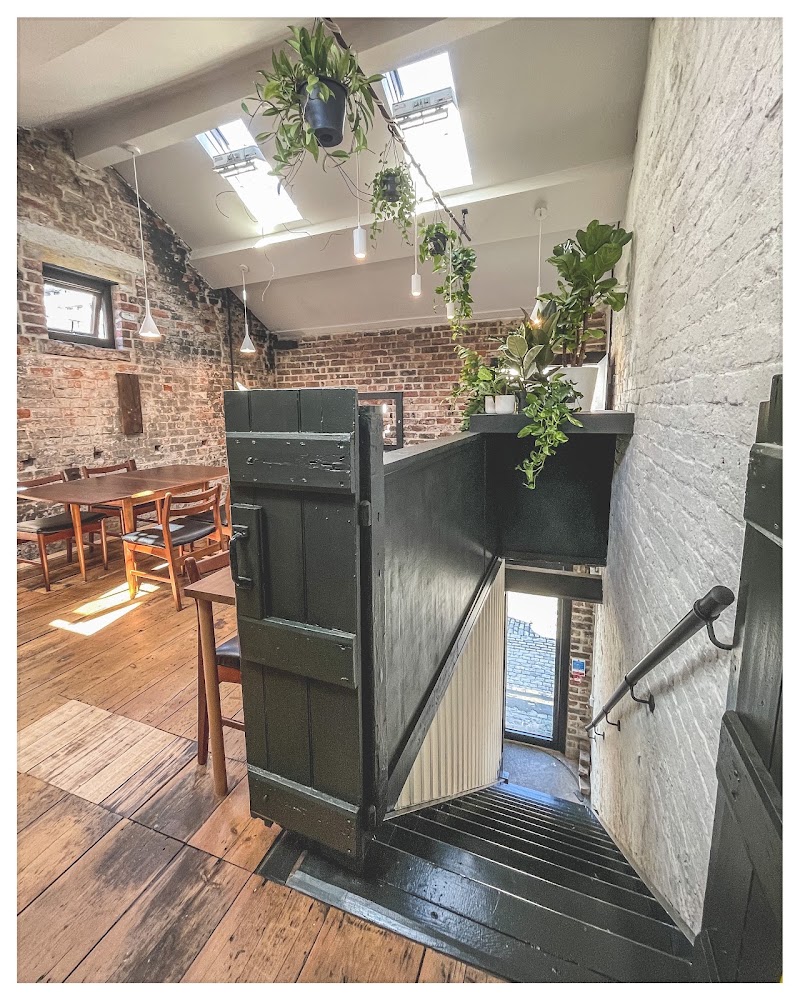
- Two floors, two moods — a communal table and bench at street level, and a quieter room up a narrow staircase for anyone who wants to disappear for half an hour.
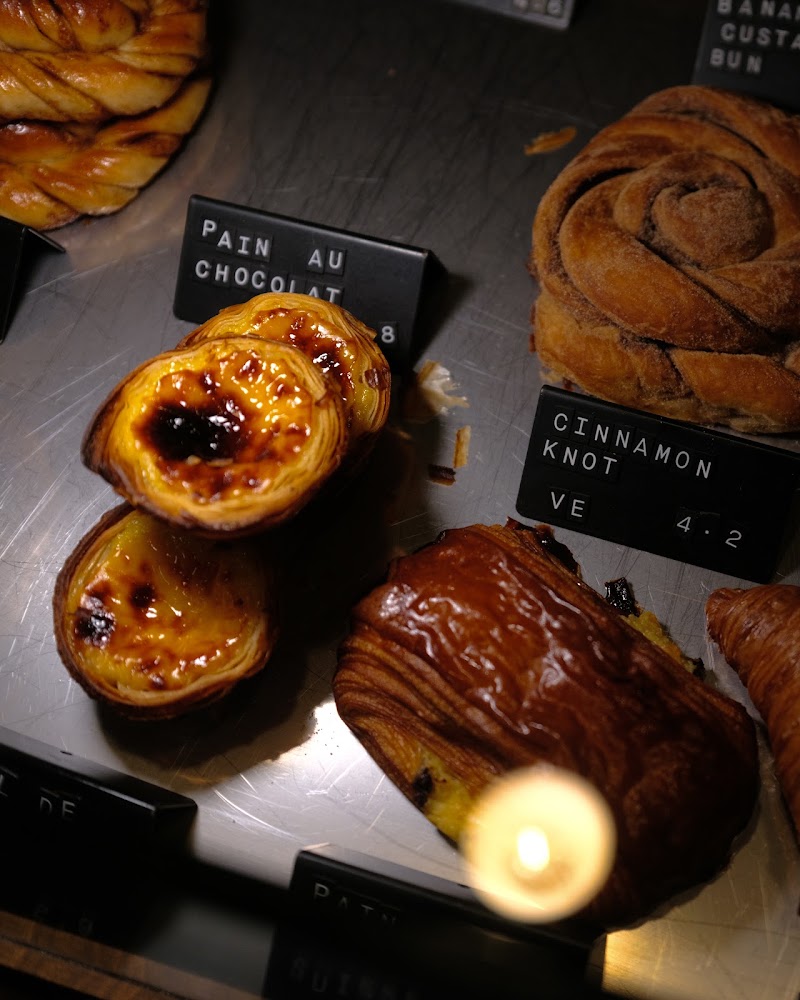
- Local baking alongside the coffee — the sweet things come from local hands rather than a national supply lorry, which is the correct answer for a café of this size.
What’s in the cup
This is a multi-roaster, and understanding what that means is the key to the whole visit. A conventional café signs with one roastery and serves its blend for years; the advantage is consistency, the cost is that the cup stops being a subject. COFFI does the harder version. It buys small quantities from a rotating list of roasteries — Berlin’s Five Elephant and London’s Assembly among them — and swaps the offer every couple of weeks. The consequence is that the café can never coast: every change means recalibrating the grinders, relearning the extraction and being able to explain to a guest why today’s coffee tastes different from the one they had last month.
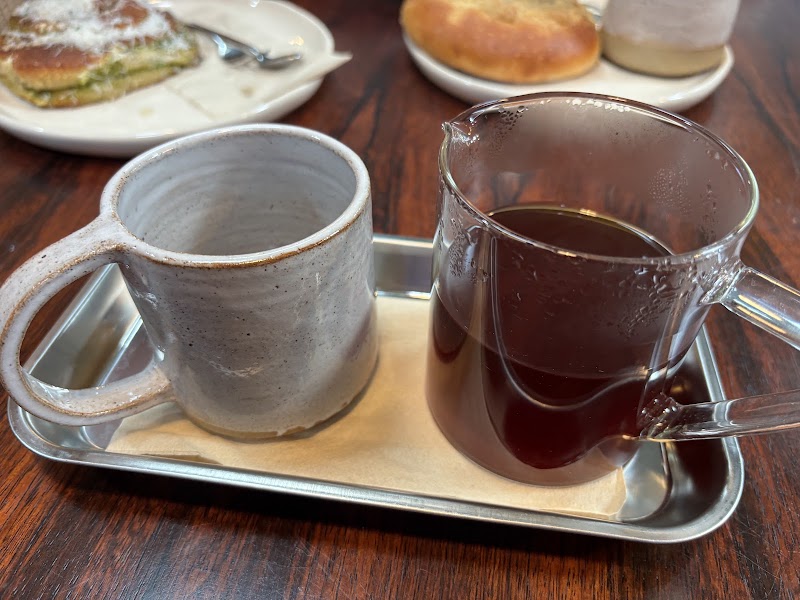
For the drinker, that turns a routine into a reason to come back. The espresso side changes character with the beans, and the filter side is where the rotation shows most clearly: a pour-over here is the closest thing Liverpool offers to tasting your way around European roasting without leaving the city. If you drink coffee with milk exclusively and want the same flat white every single time, that is a perfectly reasonable preference, and this is not the café that serves it best. If you want to be asked what you usually like and then handed something you have not tried, this is exactly the counter for it.
The other thing worth saying is that the knowledge here is offered rather than imposed. The reputation of multi-roaster bars is that they intimidate; this one has the opposite one. Newcomers to specialty coffee get guided, not tested, and the staff’s job is understood to be translation rather than gatekeeping. That combination — genuinely serious sourcing with genuinely unpretentious service — is why the place gets named alongside the country’s better coffee bars despite being a small room on a back lane.
Who’s behind it
COFFI opened in late 2021, and its origin story is unusually modest for a café that ended up on national lists: it started with very little capital and grew on the strength of what it poured. The founders keep themselves out of the public record — there are no interviews to read, no manifesto on a website, and the business runs its public life almost entirely through social media, where the posts are about the beans currently on the bar rather than about the people behind it.
That reticence is worth reporting honestly rather than papering over with invention. What can be said with confidence is the shape of the operation: independent, single-site, small, and run by people whose priority is visibly the coffee programme rather than expansion. In a city-centre café market where the fashionable route is to open a second and third branch as fast as possible, staying one room in a coach house is itself a statement of intent.
Who it suits, and how
The purest use of this café is the deliberate one: come for the coffee, sit down, drink it while it is at temperature, and pay attention. That sounds precious until you have done it — a filter brewed from a rotating single origin is a fifteen-minute experience rather than a fuel stop, and the room is quiet enough to let it be one.
It is unusually good for solo visits. The long communal table downstairs solves the problem of eating alone in public, because at a shared table nobody is sitting alone in the first place, and the upstairs room is the escape hatch for anyone who wants to read without company. That two-mode layout is the café’s most practical feature and the thing regulars use it for.
It is also a strong choice for a proper conversation. The space is small and unamplified, there is no music fighting you and no kitchen clatter, so two people can talk without leaning in. Larger groups are a poorer fit — a coach house divided over two floors with a narrow staircase between them is not built to seat six together, and arriving as a crowd at the busiest part of the day is optimistic.
On laptops, be realistic. The café publishes nothing about Wi-Fi or power points, the trading day ends in the afternoon, and the whole design of the room points towards drinking and talking rather than towards a work shift. A short stretch of reading or writing upstairs between the waves is entirely normal; treating a communal table in a small speciality bar as a desk for four hours is not what the space is for, and there are larger rooms in the city that are.
The room
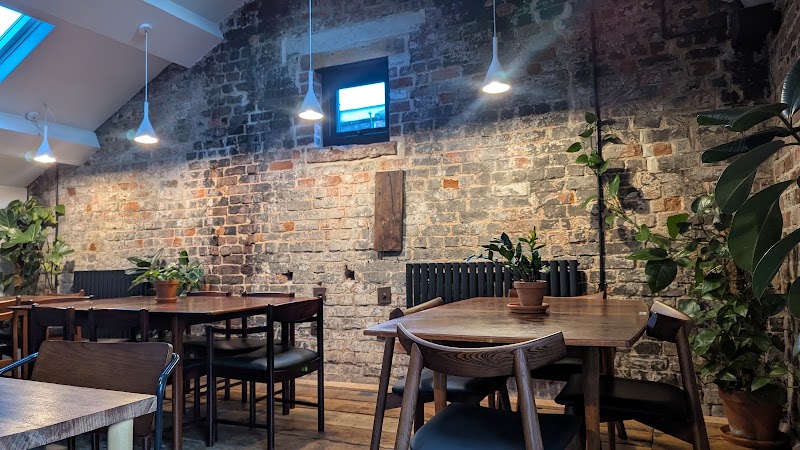
The building does a lot of the work. This is a Grade II-listed coach house — a genuinely old piece of the Georgian city, restored rather than gutted — and it sits on a cobbled lane rather than a main road, which means the first impression is of having found something rather than of having walked into something. The conversion is minimalist to the point of austerity: whitewashed and exposed brick, plain tables and chairs, no decorative programme to speak of.
Downstairs is organised around a long table with bench seating; upstairs, reached by a narrow staircase, there is more seating and noticeably less traffic. The total capacity is small, which is the honest headline: at peak there may be a wait, and the staircase makes the upper floor awkward for anyone with mobility limitations or a pushchair. There is no terrace, though the lane itself is the sort of quiet, cobbled, cathedral-shadowed spot that people linger on with a cup in hand.
The atmosphere has been described as understated and quietly confident, and that is exactly right. Nothing in the room is trying to be photographed. The effect is a café that feels considerably calmer than its location — a few minutes from one of the busiest nightlife quarters in the north of England — has any right to be.
Beyond the coffee
Food here is deliberately narrow, and that is a decision rather than a limitation. There is no full kitchen and no all-day brunch operation; what sits on the counter is baking, sourced locally rather than trucked in from a national supplier, and it is there to accompany the coffee rather than to compete with it. A café that changes its beans every fortnight has made clear where its attention goes, and a large menu would only dilute it.
What that means practically is simple: come here for coffee and something sweet with it, and eat your actual meal elsewhere. Anyone arriving hungry and expecting eggs will be disappointed, and anyone arriving for a serious cup and a pastry will find the balance exactly right.
When to come
This is a daytime café with an early start and an afternoon finish — there is no evening trade and no late crowd, so it belongs in the first part of a day out rather than at the end of one. Mornings on a weekday are the calmest window and the best time to talk to the counter about what is currently on the bar; weekend middays are the busiest, when the Georgian Quarter and the cathedral walk bring people down the lane.
Because the roster of beans changes every couple of weeks, there is a genuine reason to return that has nothing to do with the time of day: come back after a month and the offer will have moved on. Regulars treat it that way, and it is the single best piece of advice about visiting. The opening schedule shown on this page is the place to check current times, including how the weekend start differs from the weekday one.
Getting there
COFFI sits on a short cobbled lane in Liverpool’s Georgian Quarter, on the slope between the city-centre shops and the ridge where the cathedrals stand. The Anglican Cathedral, the Metropolitan Cathedral and the shell of St Luke’s — the bombed-out church left standing as a memorial — are all within an easy walk, which makes the café a natural stop on the best architectural walk in the city.
Liverpool Central station is close enough to walk from comfortably, and the independent shops and bars of the Ropewalks lie between the two. The lane itself is easy to miss: it is quiet, narrow and set back from the main routes, so look it up on the map before the first visit rather than expecting to stumble on it. Driving into this part of town is possible but pointless — the streets are narrow and the whole area is better on foot.
Good to know
Manage two expectations and this café will not disappoint you. First, the beans change: if you fall in love with something, ask what it is and buy a bag, because in a fortnight it will have been replaced. That is the format working as designed, not an inconvenience. Second, this is a coffee bar rather than an eatery, so plan food around it.
The honest constraints are size and access. It is a small building on two floors with a narrow staircase, which limits both capacity and step-free seating, and at peak the ground floor fills quickly. Against that, the trade-off is what a small room buys you: a counter that has time to talk to you, and coffee that is being chosen by someone who clearly enjoys choosing it.
Questions and answers
Whose coffee do they serve?
Several roasteries, in rotation. The bar works as a multi-roaster, changing the line-up roughly every two to three weeks; Berlin’s Five Elephant and London’s Assembly are among the names that have appeared on it.
Why does the coffee keep changing?
Because that is the concept. Buying small lots from many roasteries lets a small café pour coffees that a single-supplier deal would never bring to Liverpool. The cost is that nothing stays on the bar for long.
Do they do filter, or only espresso?
Pour-over is one of the reasons the place exists, and it is where the rotating beans show themselves best. It takes longer than espresso, which is part of the point.
Is it intimidating if I do not know much about coffee?
No — the café has the opposite reputation. Staff are used to guiding people who are new to speciality coffee, and the approach is to explain rather than to test.
Is there proper food?
No. There is locally made baking to go with the coffee, but no kitchen and no brunch menu. Come for the cup and eat your meal elsewhere.
How old is the café?
It opened in late 2021 and grew from very modest beginnings into one of the coffee bars people travel across the city for.
Can I work here on a laptop?
It is not the natural fit. Nothing is published about Wi-Fi or power points, the room is small and the day ends in the afternoon. A short stretch upstairs is fine; a full working session belongs in a larger room elsewhere in the city.
Is it easy to find?
Not on the first attempt. It is on a quiet cobbled lane off the main routes in the Georgian Quarter, below the cathedrals — worth checking the map before you set off, and worth the detour once you have.
Opening hours
| Day | Hours |
|---|---|
| Monday | 08:00–16:00 |
| Tuesday | 08:00–16:00 |
| Wednesday | 08:00–16:00 |
| Thursday | 08:00–16:00 |
| Friday | 08:00–16:00 |
| Saturday | 09:00–16:00 |
| Sunday | 10:00–16:00 |
Photos
Visitor reviews
Reviews last updated: 2026-08-10 17:34:29
Data is refreshed monthly. Sources: liverpoolka.com and editorial picks based on reviews.
Probably the darkest roast I’ve had recently. Very bold and bitter up front, but balanced by a surprisingly rich fruitiness that I really enjoyed. The cups are adorable, too. The latte art looked like it had a little mis…
Зайшли, випили чудової кави та залишилися, щоб помилуватися чудовим краєвидом з лавки на вулиці. Нас обслуговували Лорен та ще один член команди, обидві чудово обслужили нас, дякуємо! 🙂
Чудова кава, затишне місце на чарівній вулиці та чудове місце для сидіння нагорі. Завжди людно, і будьте готові сидіти за одним столиком, але це чудова атмосфера. Бонусні бали за смачну булочку з заварним кремом!
Вчора відвідав(ла) вас з Ірландії Дуже вражений(а) обслуговуванням та якістю кави. Ми замовили каву за £3.29 (€3.69), що зараз рідко можна знайти в кафе. Коли я пішов(ла) за другою чашкою, мені сказали, що моя кава з…
Кава смачна, як капучино, так і кава, приготована в пакетах. Персонал привітний і добре знає все про каву та зерна☕️ повернуся ще за чашкою кави наступного разу, коли буду в Ліверпулі.
До речі, коли ми приїхали, мі…