

Café · Liverpool · ⭐ 9.3/10 · 1907 reviews · updated: 2026-08-10 17:34:25
Address: First Floor, 61 Lord St, Liverpool L2 6PB, United Kingdom
You have to climb for this one. Rococo Coffee House sits on the first floor above a shopfront on the city’s main retail run, reached by a staircase steep enough that regulars joke about it, and the reward at the top is a set of Victorian rooms that almost nobody walking below knows are there. It has been independent since 2008, it roasts its own coffee in a converted warehouse across town, and it is generally reckoned to be the largest independent coffee house in the centre of Liverpool.
Highlights
- They roast their own — the beans come from Liverpool Roasting Company, the owners’ roastery in a Baltic Triangle warehouse, which supplies this room, their other cafés, wholesale customers and a subscription list.
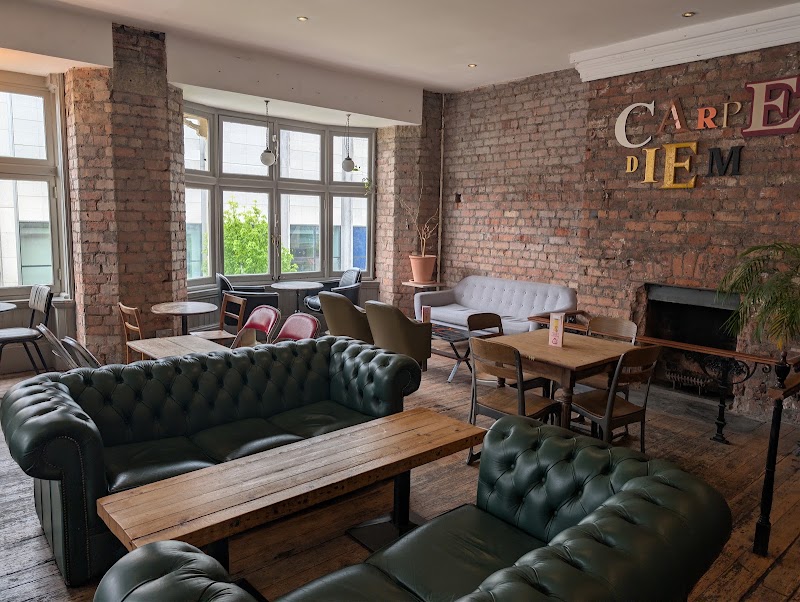
- An 1882 building — one of the oldest survivors on its stretch of the retail quarter, with three grand rooms, a Victorian hallway, original fireplaces and the kind of ceiling height nobody builds into a coffee shop now.
- Hidden in plain sight — first floor, up a long flight of stairs, invisible from the pavement; the crowd is people who know rather than people who wandered in.
- Named for the movement, decorated like it — gilt mirrors and chandeliers set against exposed brick and patterned wallpaper, a deliberately theatrical reading of the eighteenth-century style the café takes its name from.
- Licensed — it is a coffee house that can also pour a glass, which changes what the later part of the day looks like.
- A three-site independent group — this room, a sister café in the business quarter near the waterfront, and the roastery café in the Baltic, all under the same two owners.
What’s in the cup
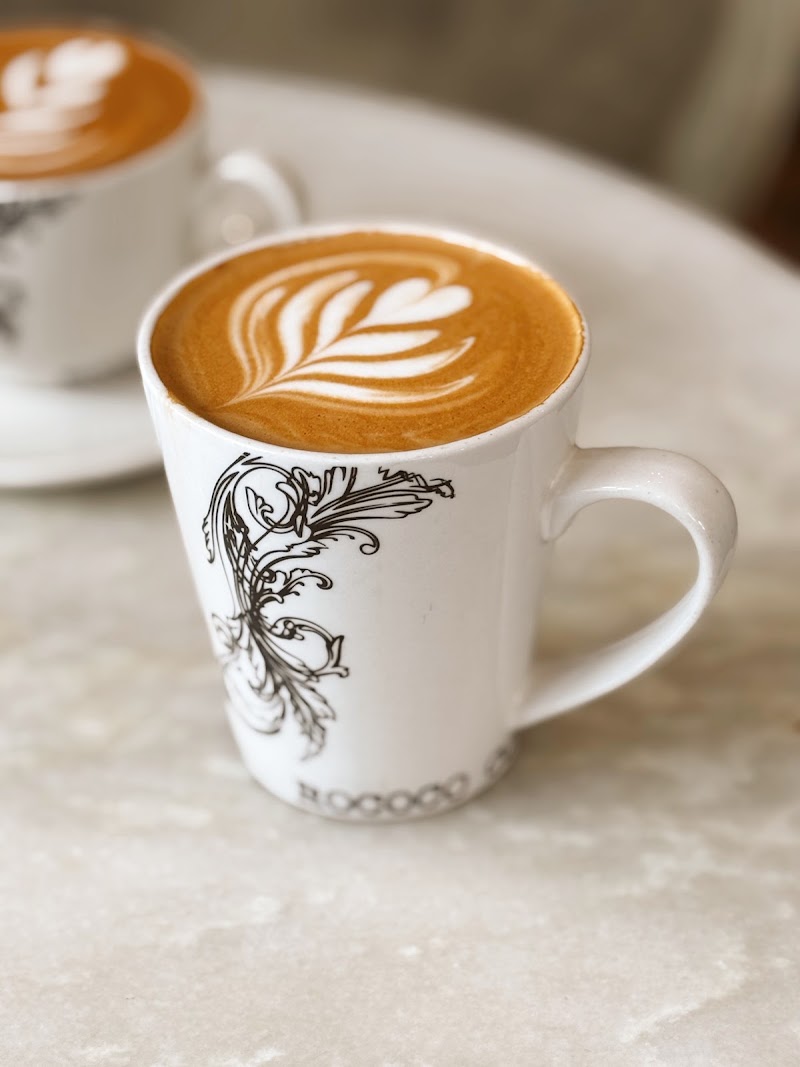
Rococo is one of the small number of Liverpool cafés that can honestly say the coffee is theirs from green bean onward. The owners bought an old warehouse in the Baltic Triangle to use as a roastery — Liverpool Roasting Company — and it now supplies every site in the group as well as wholesale accounts and a home subscription list. That vertical arrangement is the single most important thing to understand about the cup here: what you are drinking is not somebody else’s house blend bought in by the sack, it is a roast the same business controls, adjusts and sells under its own name.
In practice that shows up as consistency with room to move. A roastery serving its own shops can hold a settled espresso profile for the milk drinks that make up most of the counter’s work, and still put something more particular on for people who want it. The offer runs to retail bags and gift packs as well, so the coffee you liked upstairs can go home with you — a straightforward test of whether a café actually believes in what it is pouring, and one Rococo passes by simply putting the beans on sale.
The wider drinks list is broad rather than purist. This is a big room that feeds people all day, so alongside the espresso bar there is a full tea offer and a range of blended and flavoured drinks that a stricter speciality bar would refuse to make. Take that as a description rather than a complaint: the place is built to serve a shopping street, and a café that size cannot afford to be doctrinaire. If you want the serious end of the group’s work, ask what the roastery has on and order it as a straight cup.
Who’s behind it
Rococo is run by business partners Gareth Dyer and Paul Vernon, who opened it in 2008 and have built outwards from it ever since. Their second café sits in the business quarter towards the waterfront; their third came about almost by accident. They had bought the Baltic warehouse to roast in, found they had more space than the roastery needed, and took out planning permission to put a coffee shop in the rest of it. That is a very particular way to grow a business — infrastructure first, then a room around it — and it explains why the coffee side of the group feels more considered than the average city-centre café chain.
The other thing worth knowing about the owners is the position they have taken publicly for years: Rococo presents itself as a defence against corporate coffee in a part of town that is otherwise wall-to-wall national chains. Sitting on a first floor above a mobile phone shop, surrounded by the biggest retail names in the country, that is not just marketing — it is a description of the daily competitive reality, and the fact that the room has held its ground since 2008 is the argument.
What it’s good for
The multi-room layout is what makes Rococo unusually flexible, and choosing your room is most of the skill. For a long conversation, the further rooms away from the counter are the ones you want: fireplaces, deeper seating, the noise of the service dropping off behind you. For a meeting that needs a table and some formality, this is one of the few central cafés with the square footage to give you one without a queue forming at your elbow.
For laptop work the honest answer is that it depends where you sit and how busy the shopping quarter is. The room is big enough that you can usually find a corner, and the atmosphere is patient rather than turn-and-burn — nobody is hovering to clear your cup. What the café does not publish is any promise about power at every table, so treat sockets as a matter of luck rather than a feature, come charged, and be prepared to move if the room fills at lunchtime. It suits a couple of focused hours far better than a whole working day.
Coming alone is easy here, and the building helps: the further you go from the till, the more it feels like sitting in somebody’s very grand front room with a book. Takeaway works but slightly misses the point — the entire proposition is the climb and the rooms at the top, and carrying a cup back down the stairs means paying the entry cost without collecting the reward.
The room
The building went up in 1882 and is among the oldest still standing on its stretch of the retail quarter; local accounts also connect it to the pirate radio era of the 1960s, when offices linked to Radio Caroline are said to have been based here. What survives is a proper Victorian first floor: a hallway, three big interconnected rooms, ornate fireplaces still in place, and enough height and window to make the whole thing feel like a piano nobile rather than a mezzanine.
The decoration leans hard into the name. Gilt mirrors, chandeliers and pattern are set against bare brick, which sounds like it should not work and does, because the bones of the building are strong enough to carry the theatre. Nothing here has the pale wood and white tile look that speciality coffee has standardised across every British city; this is a room with an accent.
Scale is the practical advantage. Because there are three rooms rather than one, sound disperses, and the café can be busy without being oppressive — a very different experience from a single-room shop at the same occupancy. The obvious limitation is the way in: a steep flight of stairs from street level, which puts the room out of reach for anyone who cannot manage them and is worth knowing before you arrive with a pushchair.
Beyond the coffee
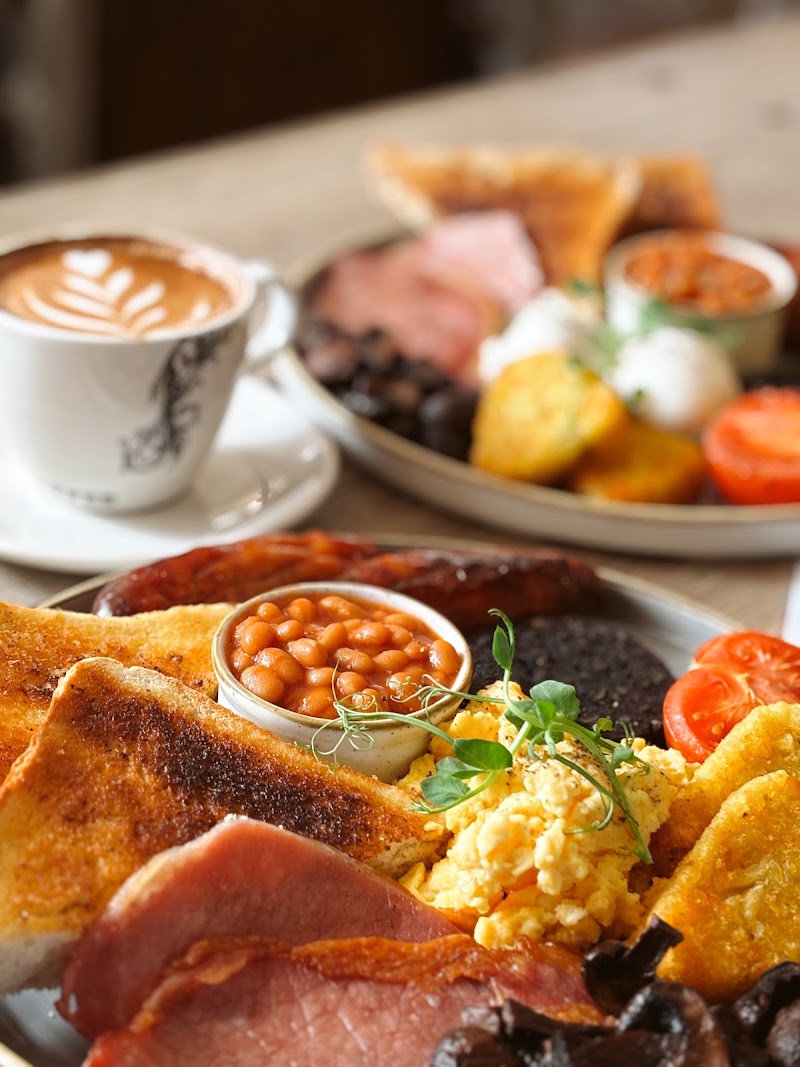
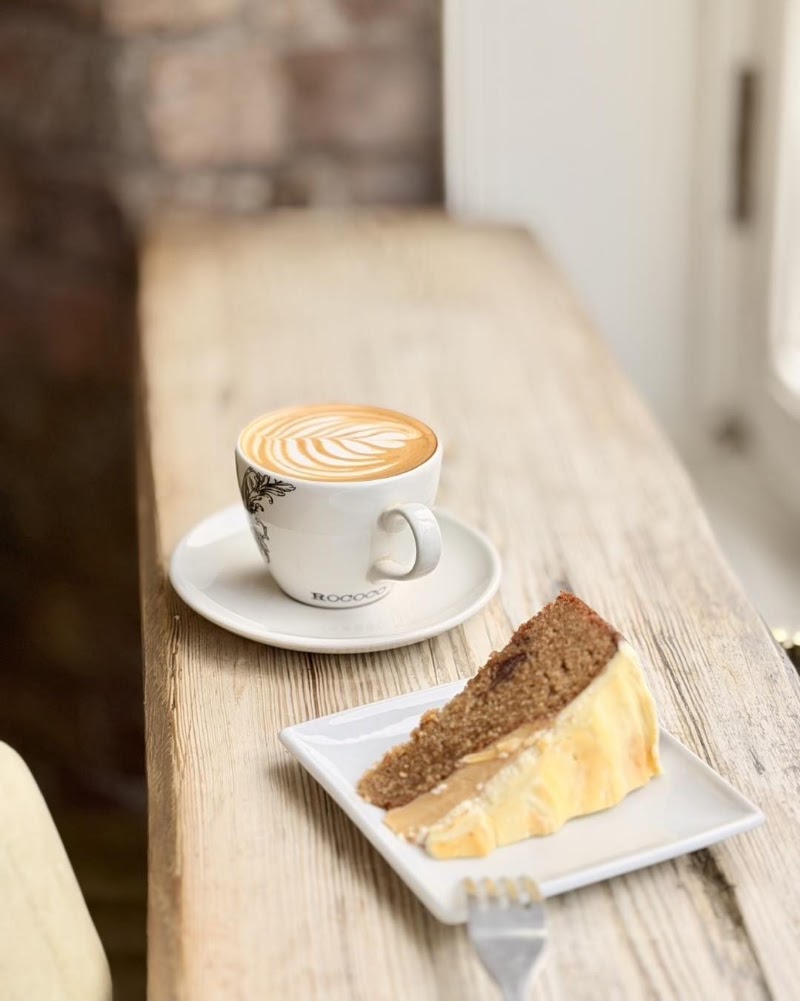
This is a kitchen-backed café rather than a pastry counter, and it is set up to be somebody’s lunch rather than somebody’s snack. Sandwiches are made to order, there is a proper savoury lunch offer built around boards and platters, and the cake selection is large by the standards of the city centre. The volume of food is one of the reasons the place can hold a room this size all day — people come up the stairs at midday to eat, not only to drink.
The licence is the other lever. A café that can serve a glass of something behaves differently in the late afternoon, and it gives the rooms a second life as a place to meet after work without moving to a bar. Coffee and tea are also sold in bags to take home, along with gift options, which is the retail tail of the roastery rather than a separate merchandising exercise.
When to come
The rhythm follows the shopping quarter below rather than an office district. Early in the day the rooms are quiet and at their best — this is the window for a long conversation or a couple of hours of concentration, before the retail traffic builds. The middle of the day is the busiest stretch, when the lunch trade and the shoppers arrive together, and a Saturday in that window is the most crowded the café gets all week.
Late afternoon settles again, and with the licence in play it becomes the sort of place people meet in rather than pass through. Rococo is a city-centre room in a retail location, so it keeps retail rhythms: it lives during the shopping day and does not attempt a late-night trade. If you are planning around a peaceful visit, aim for the first part of the morning or the last part of the afternoon.
Getting there
You are in the heart of the central shopping district, a couple of minutes from the Queen Victoria Monument at Derby Square and roughly halfway between the waterfront and the main retail centre. James Street is the closest underground station, Liverpool Central is barely further, and Moorfields serves the business quarter side. Anyone arriving by train from outside the city will find it about a ten-minute walk from Lime Street.
Because the entrance is at first-floor level above a shopfront, it is easy to walk straight past it — look up rather than along, and expect a staircase rather than a door onto the pavement. Driving into this part of the centre is unrewarding: it is pedestrianised and bus-priority in places, and the multi-storey car parks serving the retail core are the realistic option. On foot from the Pier Head or the Albert Dock it is a short uphill walk.
Good to know
- Stairs are the price of entry. A steep flight from street level, which rules the room out for some visitors — check before you plan around it.
- The coffee is roasted by the same owners at their Baltic Triangle roastery, so the beans you drink are also the beans on the retail shelf.
- Pick your room. Near the counter is sociable, the far rooms are calm; the difference is bigger than it is in most cafés.
- Sockets are not guaranteed. Nothing is published about power at every table, so arrive charged if you plan to work.
- It is licensed, which makes it a viable after-work meeting spot and not only a daytime café.
- One owner, three rooms across the city. The other two sites are quite different in character — do not assume this room’s atmosphere travels.
Questions and answers
Does Rococo roast its own coffee?
Yes. The owners run Liverpool Roasting Company from a converted warehouse in the Baltic Triangle, and it supplies this café, their other sites, wholesale customers and a subscription service.
Where exactly is the café — I cannot see it from the street.
It is on the first floor above a shop unit in the main retail quarter, reached by a staircase. There is no ground-floor room, which is why so many people walk past it.
Is it accessible if I cannot manage stairs?
The way in is a steep flight of steps from street level, so it is difficult for anyone with limited mobility and awkward with a pushchair. Contact the café directly if access is a concern.
How long has it been open?
It has traded as an independent since 2008, which by city-centre café standards makes it an institution rather than a newcomer.
Can I work here with a laptop?
For a couple of hours, comfortably — the rooms are large, the pace is unhurried and nobody rushes you. For a full working day it is less reliable, mainly because power at the table is not something the café promises.
Is there proper food or only cake?
There is a full savoury lunch offer, made-to-order sandwiches and boards among it, alongside a large cake selection. Plenty of people come up the stairs specifically to eat.
Can I buy the beans to take home?
Yes — coffee and tea are sold in bags, with gift and subscription options, which is a direct extension of the roastery rather than a separate retail line.
Is it suitable for a group or a meeting?
Unusually so. Three connected rooms mean there is genuine space, and it is one of the few central cafés where a table of several people does not dominate the whole floor.
Does it serve alcohol?
It is licensed, so a glass with lunch or after work is possible. It remains a coffee house in character rather than a bar.
Opening hours
| Day | Hours |
|---|---|
| Monday | 09:00–18:00 |
| Tuesday | 09:00–18:00 |
| Wednesday | 09:00–18:00 |
| Thursday | 09:00–18:00 |
| Friday | 09:00–18:00 |
| Saturday | 09:00–18:00 |
| Sunday | 10:00–18:00 |
Photos

Visitor reviews
Reviews last updated: 2026-08-10 17:34:25
Data is refreshed monthly. Sources: liverpoolka.com and editorial picks based on reviews.
У мене був досить приємний досвід у цьому кафе. Обслуговування, атмосфера та їжа створюють враження, що вони ідеально доповнюють одне одного. Мені дуже сподобався смак та аромат їхньої кави. Це справжня кава з хороших зе…
Я завжди відвідую кав'ярню Rococo щоразу, коли буваю в Ліверпулі. Кава чудова, і тут панує така приємна атмосфера. Тости, що подають прямо на порозі, просто неймовірні. Не можу знайти до цього місця жодних недоліків.
Фантастичне місце для сніданку в Ліверпулі! Ми замовили англійський сніданок та яйця-пашот з пюре з авокадо, а також чудову каву. Все було дуже смачно, і ви справді можете відчути високоякісні інгредієнти. Обслуговування…
Кафе "Rococo" розташоване в центрі міста, до якого можна потрапити через сходи між двома магазинами, це точно не пропустити. Це моє улюблене кафе в Ліверпулі. У різних залах є достатньо місць для сидіння. Інтер'єр дуже г…
Оманливо великий. Ми зайняли місце, а потім дізналися про гарну задню кімнату! Однак сидіти спереду чудово, щоб спостерігати за людьми зовні. Їжа була смачна, але кров'яна ковбаса трохи запеклася!